
The concept of Enhanced Games Explained: Steroid Olympics, Ethics, Risks & Legal Debate is transforming how people perceive elite sport.
Athletes, investors, and fans now question old rules and hidden realities. Money, science, and ethics collide inside this growing debate. In 2025, this concept no longer feels imaginary.
Introduction & Background
- The rise of power-enhanced Olympics reflects growing frustration with elite sport.
- For years, fans suspected that doping in sports existed behind closed doors. Major scandals revealed how performance-enhancing drugs shaped champions quietly. As a result, trust in sports integrity weakened worldwide.
- Modern athletes face extreme pressure every season. Winning controls contracts, fame, and financial security.
- Some experts argue that sport already rewards genetics more than fairness. This tension opened doors for the Enhanced Games discussion.
Must read: Sport on Steroids: Ethics, Law & Fair Play in American Sports (2025 Reality Check)
What are the Enhanced Games?
The Enhanced Games openly allow Athlete performance enhancement under supervision.
They reject secrecy tied to Pharmaceutical abuse in sport.
Organizers promote transparency instead of punishment. Supporters call it honest competition. This model removes traditional Drug testing in sports.
No Anti-doping regulations apply here. Medical oversight replaces hidden cheating systems.
Still, critics worry about safety.
Why are the Enhanced Games in the news?
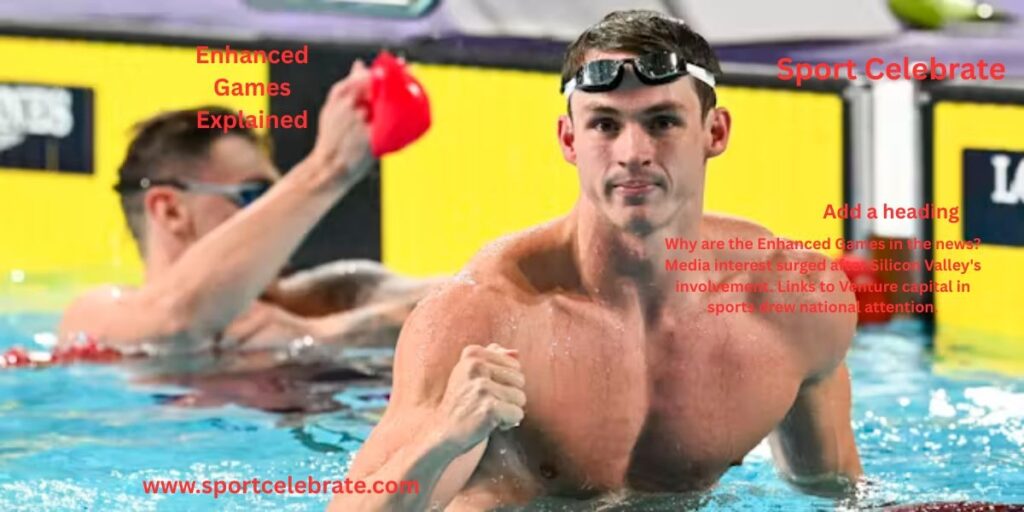
Media interest surged after Silicon Valley’s involvement. Links to Venture capital in sports drew national attention.
Reports connected Peter Thiel’s sports investment to the project. That alone sparked headlines.
Public curiosity continues to rise. Fans debate legalising doping in athletics daily. Podcasts and sports shows fuel discussion. Attention keeps growing.
Who came up with this and why?
The founders criticize current Olympic values and ethics. They believe bans protect brands more than athletes.
This reflects frustration with Hyper-commercialised sport. Profit often outweighs principles. Their focus remains on athlete autonomy.
They stress informed consent with medical oversight. Athletes knowingly accept risks.
Choice defines their vision.
When and where will the Enhanced Games take place?
Early plans suggest US-based pilot events. Locations favor flexible Governance of sports laws. Legal experts guide venue selection. Risk control remains central.
Organizers plan small-scale launches. They avoid Olympic-level exposure initially. Limited crowds reduce Legal and medical liability. Future growth depends on response.
Concept & Philosophy
At its core, enhancement-based elite sport promotes evolution. Supporters frame it as Human performance enhancement.
They view sport as innovation, not restriction. Change feels inevitable. The slogan echoes Faster, higher, stronger.
That phrase already pushes Human performance limits. The Games remove hypocrisy.
Reality replaces illusion.
The case for enhancement
Advocates argue enhancement already exists indirectly. Technology, nutrition, and genetics shape winners. Drugs simply accelerate outcomes. Science enters competition.
Medical experts discuss the Harm reduction debate seriously. Supervised use may reduce hidden dangers. Black markets increase harm. Transparency could save lives.
What’s sport for?
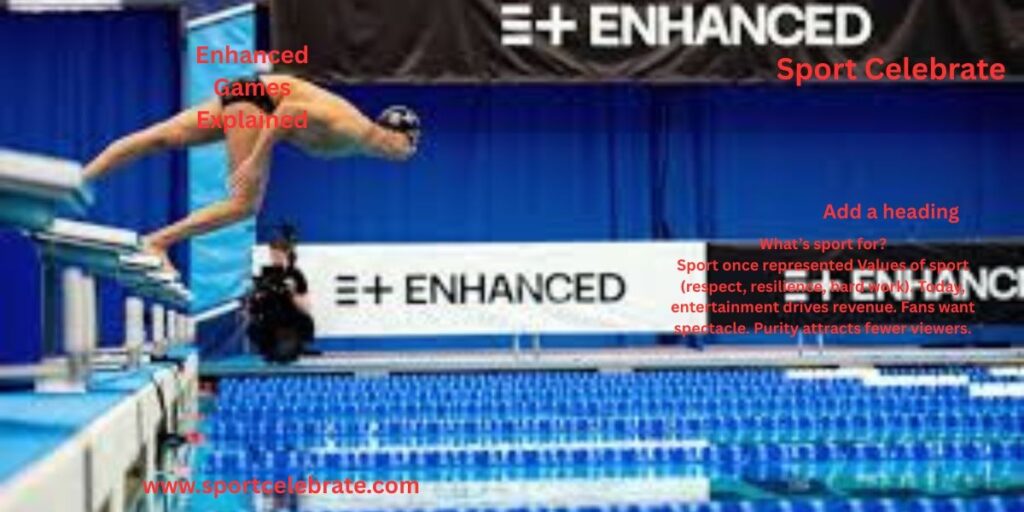
Sport once represented Values of sport (respect, resilience, hard work). Today, entertainment drives revenue. Fans want spectacle. Purity attracts fewer viewers.
The Sport entertainment industry thrives on extremes. Records sell tickets and ads.
Moderation rarely excites audiences. Power draws attention.
Why are performance-enhancing drugs forbidden anyway?
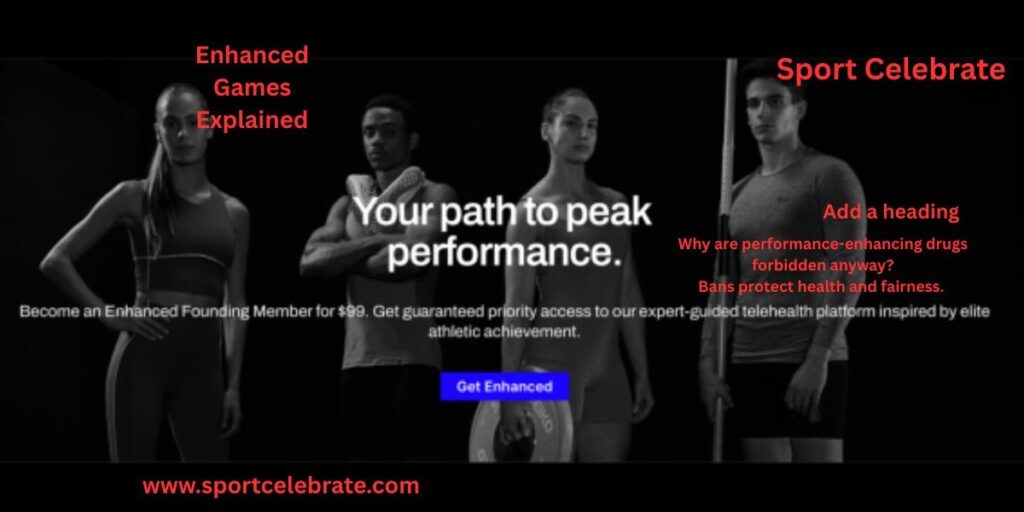
Bans protect health and fairness. The World Anti-Doping Agency (WADA) leads enforcement.
Still, global compliance remains uneven. Inequality weakens rules.
Testing favors wealthy programs. Poor athletes face harsher penalties. This challenges Fairness and equity. Critics call the system flawed.
Ethical & Social Concerns
Ethics anchor performance-driven competitions and debates. Doctors warn about athletes’ health risks. Long-term damage remains unknown. Short success may cost lives.
Society fears normalization. Youth athletes and risk increase dramatically. Role models influence behavior. Ethical lines blur quickly.
Youth Shadow Effect
The Enhanced Games may officially be for adults, but young athletes silently emulate them. Social media promotes a shortcut culture, where the value of patience and long-term training diminishes.
In this process, risk becomes normalized, and dangerous behavior starts to seem “acceptable.”
Winning — but at what cost?
Elite athletes already suffer silently. Many retire with chronic injuries.
Enhanced sport magnifies danger. Careers may be shortened.
Former athletes report lifelong medical issues. Healthcare costs follow success. That reality shapes criticism. Dreams carry consequences.
More inequality and prospects for exploitation
Wealth controls the enhancement quality. This deepens Inequality in elite sports.
Poor athletes face unsafe shortcuts. Power imbalance grows.
Sponsors and agents gain leverage. Athletes risk exploitation. Exploitation of vulnerable athletes becomes systemic. Freedom feels limited.
Costs to participants
Enhanced competition requires heavy investment. Medical teams, drugs, and recovery raise costs. Insurance premiums increase sharply. Financial pressure intensifies.
Traditional vs Enhanced Athlete Risk Profile
This table highlights why enhanced athletes face higher financial and medical risks than traditional competitors.
| Factor | Traditional Athlete | Enhanced Athlete |
| Insurance Access | Stable | Limited |
| Medical Liability | Shared | Mostly personal |
| Career Recovery | Possible | Uncertain |
| Post-retirement health | Manageable | High-risk |
An avalanche of criticism
Sports institutions reacted strongly. Critics cite the integrity of competition. They fear Experimental drug use. Reputation risks grow.
Ethicists question Medical ethics in sport. Doctors pledge safety first. Profit conflicts with values. Debate continues.
How has the global sports community reacted?
Olympic bodies rejected the concept. Athletes expressed mixed opinions. Some welcome honesty. Others fear harm.
Public opinion remains divided. Surveys show strong opposition. Younger fans show curiosity.
Generational gaps appear.
Legal & Governance Issues
Laws vary widely. Some regions allow medical freedom. Others restrict enhancement.
Uncertainty dominates.
Governments fear legal precedent. Sport law meets labor law. Liability remains unclear.
Risk shapes decisions.
This article discusses performance enhancement in sports from an analytical and ethical perspective, and does not promote the use of illegal drugs.
Potential legal issues
Consent forms may fail legally. Long-term harm invites lawsuits. Medical negligence claims grow. Courts may intervene.
Athletes often waive rights. That raises fairness concerns. Legal experts warn strongly.
Storm clouds gather.
Organisers’ Perspective
Organizers promise transparency. They promote controlled environments. Safety replaces secrecy. That narrative drives defense.
They compare it to extreme sports. Participants accept risks knowingly. Regulation adapts.
Choice leads.
TEG’s defence
TEG emphasizes medical supervision. Doctors monitor protocols. Data improves safety. Science leads.
They reject underground doping. Open systems reduce harm. This appeals to pragmatists.
Critics remain skeptical.
Media & Public Debate
Media coverage fuels controversy. Shock headlines dominate. Clicks reward outrage.
Nuance fades.
Public forums polarize opinions. Some praise honesty. Others defend Drug-free sport ideals.
Culture clashes intensify.
Sport on Steroids: Walking the ethical and legal tightrope of the Enhanced Games
This debate balances integrity vs. entertainment. Ethics confront profit. Sport’s meaning feels threatened. Or transformed.
The answer remains unclear. What defines authenticity? Rules or results? Society decides.
Marketing and Branding Strategy of the Enhanced Games! Enhanced Games push to be the Olympics
Provocation drives branding. Shock attracts attention. Silence kills innovation. Noise builds momentum.
Marketing targets modern consumers. Extreme content sells. Moderation feels outdated. Attention wins.
Global Expansion and Cultural Impact of the Enhanced Games
This movement feels inevitable. Technology reshapes humanity. Sport mirrors culture.
Change accelerates.
History shows resistance first. Acceptance follows later. Patterns repeat. Time decides.
Business & Commercial Angle
Money fuels decisions. Sponsors chase visibility. Commercial gain in sport dominates priorities. Ethics follow revenue.
Streaming platforms show interest. Niche audiences grow. Monetization looks promising.
Risk attracts capital.
You will like: Cheney Stadium: Iconic Home of Tacoma’s Powerful Pride Go (2025 Deep Fan Guide)
Hidden Stakeholders in Enhanced Games
| Stakeholder | Direct Benefit | Hidden Risk |
| Athletes | High earnings | Long-term health damage |
| Investors | Disruptive profits | Legal backlash |
| Medical teams | Research data | Ethical accountability |
| Media platforms | Viral content | Reputational risk |
‘Steroid Olympics’ organiser to go public in $1.2bn SPAC deal
The SPAC move signals confidence. Valuation surprised analysts. Investors see disruption.
Markets reward bold ideas.
| Area | Possible Outcome |
| Sponsorship | High-risk returns |
| Regulation | Legal battles |
| Fan Growth | Rapid yet divided |
Final Thoughts
Enhanced Games Explained: Steroid Olympics, Ethics, Risks & Legal Debate forces global reflection. Ethics, health, and entertainment collide. Sport stands at a crossroads. The future remains uncertain.
FAQs
Are the Enhanced Games legal in the US?
It depends on state medical and sports laws.
Will athletes be tested?
No traditional testing applies.
Does WADA support it?
No, World Anti-Doping Agency (WADA) strongly opposes it.
Are athletes medically supervised?
Organizers claim full supervision.
Will this replace the Olympics?
Unlikely, but it may reshape sports culture.
This article is written for informational and analytical purposes, referencing public debates, sports law experts, and global anti-doping authorities such as WADA.

Will Smith, founder of SportCelebrate.com, shares the best sports gear and celebration finds to fuel your passion and joy.