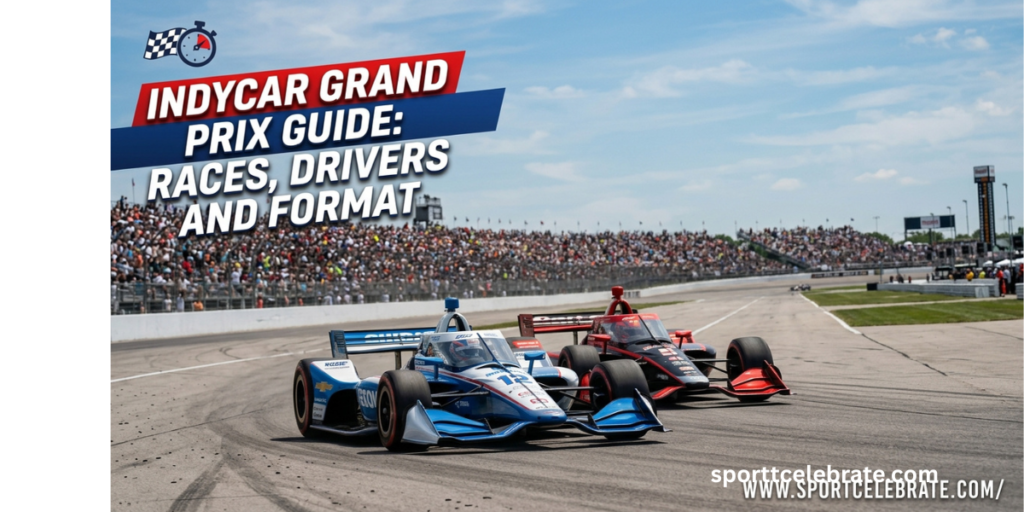
IndyCar is one of the most demanding forms of open-wheel racing in North America. Unlike a championship built around one type of circuit, the series asks drivers to master street circuits, permanent road courses, and high-speed ovals. That variety is a major reason an IndyCar season can change direction so quickly.
The 2026 championship has an especially varied calendar, with races ranging from the streets of St. Petersburg and Long Beach to Indianapolis Motor Speedway and Road America. The official schedule also includes the new Freedom 250 Grand Prix on the streets of Washington, D.C.
For new fans, however, the terminology and race structure can feel confusing. What exactly makes a Grand Prix different from the Indianapolis 500? How does qualifying work? Which drivers should you watch?
This guide explains the IndyCar Grand Prix concept, the major races, the drivers, and the basic format in simple terms.
What Is an IndyCar Grand Prix?
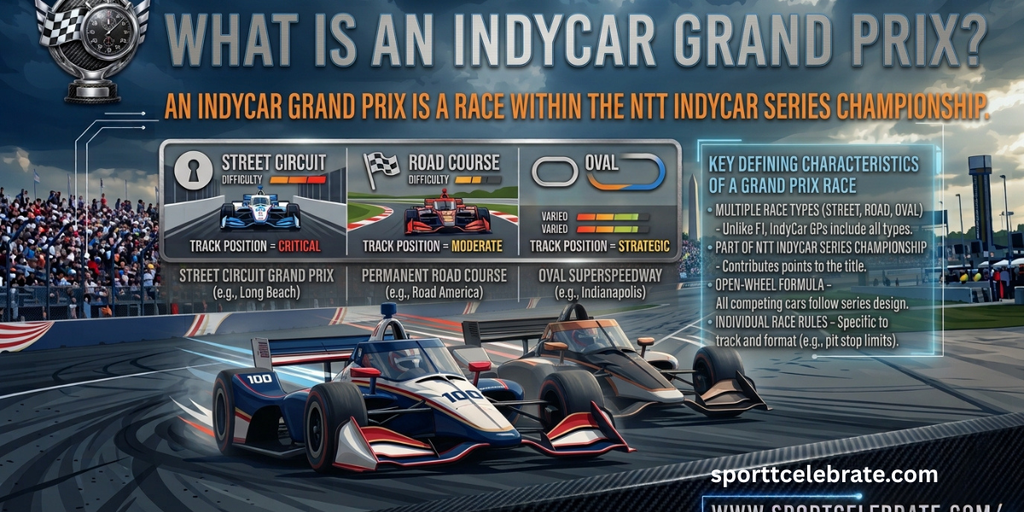
An IndyCar Grand Prix is a race within the NTT INDYCAR SERIES championship. The word Grand Prix doesn’t mean every race uses the same circuit style. IndyCar Grand Prix events can take place on temporary street tracks or permanent road courses. That’s one of the series’ biggest attractions.
A driver might spend one weekend navigating narrow city streets and then face a completely different challenge at a traditional racing circuit. The car remains an IndyCar, but the demands placed on the driver can change dramatically.
The 2026 schedule illustrates this variety. It includes events at St. Petersburg, Arlington, Barber Motorsports Park, Long Beach, Road America, Mid-Ohio, Portland and other venues.
IndyCar Race Types Explained
The championship generally revolves around three broad circuit categories.
| Race Type | Main Challenge | Example |
| Street circuit | Tight corners, walls and limited space | Long Beach |
| Road course | Technical corners and elevation changes | Road America |
| Oval | High speed and close racing | Indianapolis Motor Speedway |
Each type rewards a different skill set.
Street Circuits
Street races take place on temporary courses created using existing roads. Drivers have very little room for error. A small mistake can put a car into a wall, while qualifying becomes particularly important because overtaking can be difficult on some layouts.
Long Beach is one of IndyCar’s best-known street events. The 2026 race marked the 42nd time the series competed on the Southern California streets.
Road Courses
Permanent road courses generally provide a wider mixture of corners, braking zones and elevation changes.
Road America is a particularly famous example. Drivers must balance straight-line speed with the ability to carry momentum through technical sections.
Road-course racing can produce complex strategic battles because tire performance, pit timing and fuel consumption all influence the final result.
Oval Racing
Oval events are different again. The cars can reach extremely high speeds, while drivers often run close together for long periods.
The Indianapolis 500 is the most famous example, but the championship also visits other oval venues. That means an IndyCar driver needs to be comfortable with several completely different forms of racing.
The Indianapolis 500 Is Different
The Indianapolis 500 is part of the IndyCar championship, but it has a unique identity.
It is held at Indianapolis Motor Speedway and is one of the most prestigious events in motorsport.
The 2026 edition was the 110th running of the race, and it appeared on the championship calendar between the Indianapolis road-course event and the Detroit Grand Prix.
The Indy 500 also has its own qualifying procedures and traditions, making it feel like a championship within the championship.
Winning the event can define a driver’s career. But success there doesn’t automatically guarantee the season-long championship. A driver must perform consistently across the entire IndyCar calendar.
How an IndyCar Race Weekend Works
A typical race weekend involves several stages before the main event. The exact schedule can vary by venue, but fans will generally encounter:
- Practice
- Qualifying
- Final preparations
- The race
Practice gives teams an opportunity to understand the circuit, test setup changes and evaluate tire behavior. Qualifying then determines the starting order.
The race itself combines speed with strategy, meaning the fastest car over one lap isn’t necessarily the car that wins after an entire race distance.
How IndyCar Qualifying Works
Qualifying is particularly important on street and road circuits.
The 2026 season introduced a new Fast Six format for street races, with the final qualifying group using single-lap runs to determine pole position. Alex Palou claimed pole for the Freedom 250 in Washington, D.C., under that format.
Qualifying matters because track position can influence the entire race. Starting near the front can help a driver avoid traffic and control the opening stages. Starting further back can force a driver to take greater risks or rely heavily on strategy.
On some circuits, overtaking is much easier than on others. That means qualifying can have a different value depending on the venue.
What Happens During the Race?
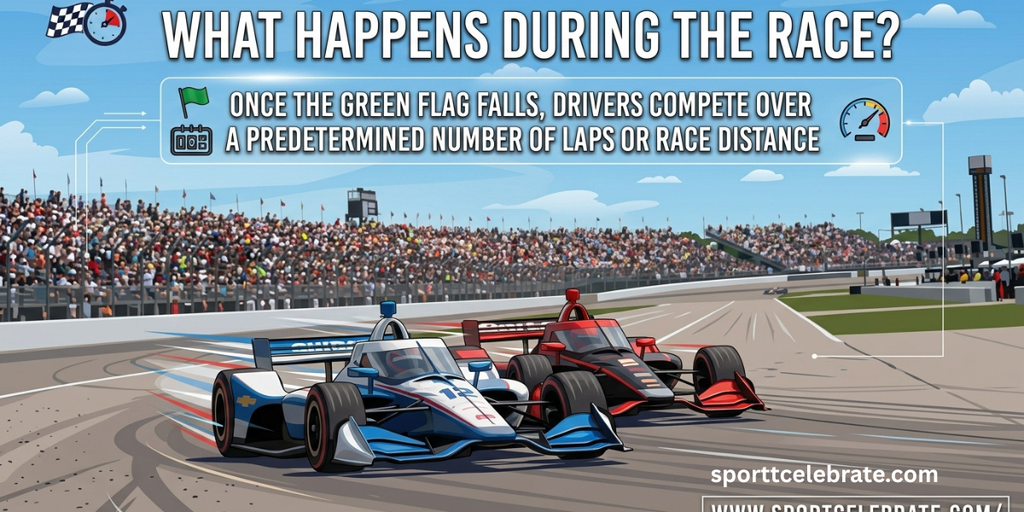
Once the green flag falls, drivers compete over a predetermined number of laps or race distance. But the race isn’t simply about driving as fast as possible from start to finish. Teams have to manage several variables.
Fuel Strategy
Fuel consumption can influence when a driver enters the pit lane. A team might attempt an aggressive strategy that requires fewer stops, while another may prioritize fresh tires and shorter stints.
Tire Management
Tire performance can change throughout a stint. Drivers need to protect their tires without losing too much speed.
Pit Stops
Pit crews change tires, refuel when permitted by the regulations, and make other necessary adjustments. A slow pit stop can erase a driver’s advantage.
Caution Periods
Incidents can bring out caution periods. When the field slows down, the gaps between cars can disappear, potentially transforming the race strategy. This is one reason IndyCar races can change dramatically in only a few laps.
Drivers to Watch
The IndyCar grid features experienced champions, established race winners and younger drivers trying to become the next major star.
Among the most recognizable names are Alex Palou, Scott Dixon, Josef Newgarden, Pato O’Ward, Kyle Kirkwood and Scott McLaughlin.
Palou entered the 2026 Washington event as the championship leader and secured his seventh pole of the season there.
Scott Dixon remains one of the most accomplished active drivers in the series. The 2026 campaign represents his 25th and final season with Chip Ganassi Racing before his planned move to Arrow McLaren for 2027.
| Driver | What Makes Him Interesting |
| Alex Palou | Consistency and qualifying speed |
| Scott Dixon | Experience and race management |
| Josef Newgarden | Oval strength and championship experience |
| Pato O’Ward | Aggressive racing style |
| Kyle Kirkwood | Speed on street circuits |
| Scott McLaughlin | Strong qualifying and oval ability |
These drivers aren’t the only competitors worth following, but they provide a useful starting point for new fans.
Alex Palou’s Growing Influence
Alex Palou has become one of the most important names in modern IndyCar. His strength is not based on one circuit type alone.
He can deliver strong qualifying performances, manage tires effectively and remain competitive over long championship campaigns.
His 2026 season has again demonstrated that consistency.
Before the Washington race, Palou had already secured six poles. His seventh came at the new D.C. street circuit.
That level of qualifying performance is significant because street circuits often reward drivers who can find the final fractions of a second without making a mistake.
Scott Dixon’s Experience
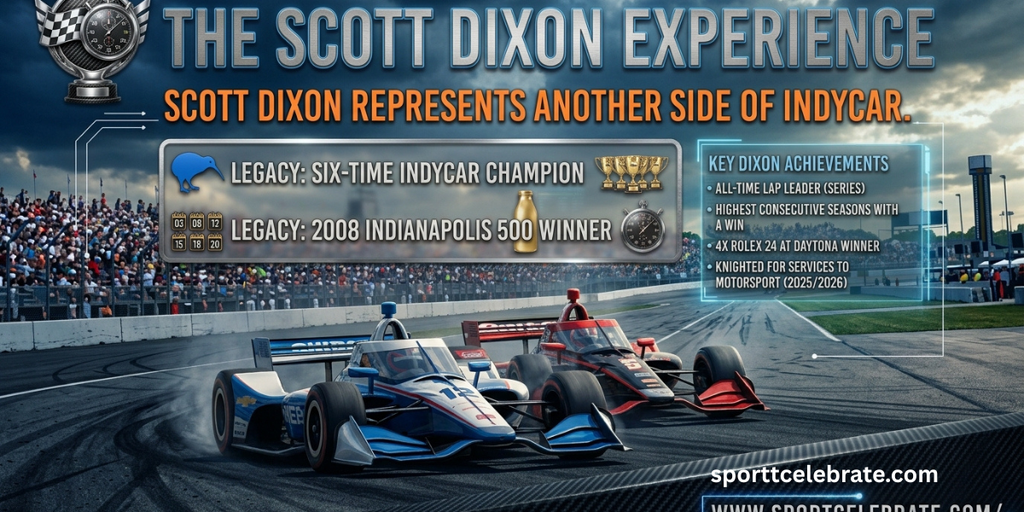
Scott Dixon represents another side of IndyCar. While younger drivers bring speed and aggression, Dixon has decades of experience understanding race situations.
The 2026 season is especially notable because it is his final year with Chip Ganassi Racing after 25 seasons with the organization. He is scheduled to join Arrow McLaren in 2027.
That makes his remaining races particularly interesting for longtime fans.
Why Strategy Matters So Much
A major difference between IndyCar and casual perceptions of racing is the importance of strategy.
A driver can have an extremely fast car but still lose because the team chooses the wrong pit window.
Similarly, a driver starting outside the front group can sometimes move forward through clever fuel management, tire conservation or a well-timed pit stop.
That makes the race difficult to predict.
The strategy can change again when a caution period appears.
Suddenly, a driver who looked out of contention may find himself directly behind the leader.
The Importance of Track Position
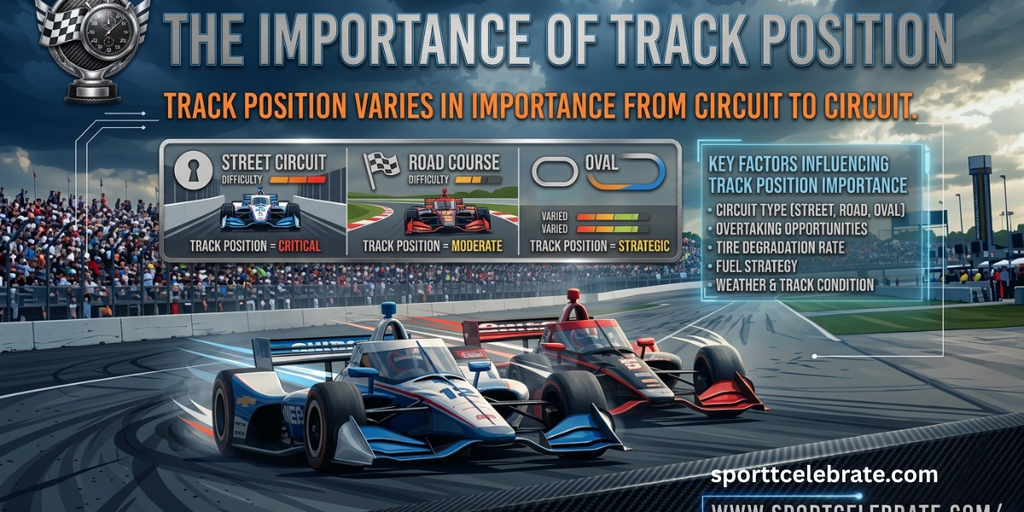
Track position varies in importance from circuit to circuit. On a street course with limited passing opportunities, starting near the front can be extremely valuable.
On an oval, however, the aerodynamic characteristics and traffic can create different opportunities.
This is why fans shouldn’t judge a driver’s performance solely by the final finishing position.
A driver who starts 20th and finishes fifth may have delivered an excellent race even if he never reached the podium.
The 2026 IndyCar Calendar
The 2026 schedule contains a broad mixture of venues.
The official calendar includes 18 championship races, with the season beginning in St. Petersburg and eventually ending at WeatherTech Raceway Laguna Seca.
Some notable events include:
- Firestone Grand Prix of St. Petersburg
- Grand Prix of Arlington
- Indy Grand Prix at Barber
- Acura Grand Prix of Long Beach
- Indianapolis 500
- Detroit Grand Prix
- XPEL Grand Prix at Road America
- Honda Indy 200 at Mid-Ohio
- Grand Prix of Portland
- Freedom 250 Grand Prix of Washington, D.C.
- WeatherTech Raceway Laguna Seca
The variety is deliberate.
The championship tests drivers across different environments rather than allowing one particular skill to dominate the entire season.
The New Washington, D.C. Grand Prix
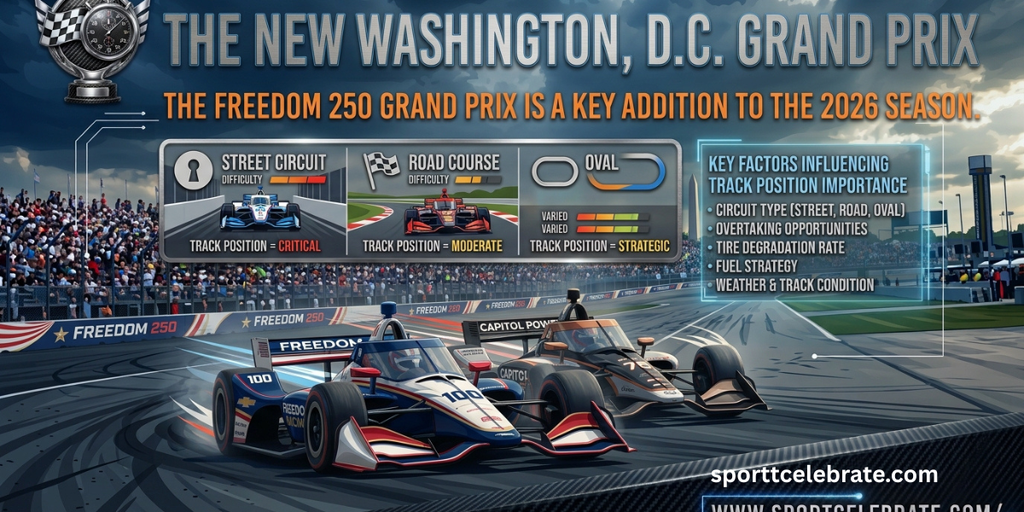
One of the most unusual additions to the 2026 season is the Freedom 250 Grand Prix in Washington, D.C.
The temporary street circuit measured roughly 1.7 miles and featured seven turns. The race was extended to 147 laps to create a 250-mile event matching the U.S. 250th-anniversary theme.
Kyle Kirkwood ultimately won the inaugural event after Palou started from pole.
The race demonstrated how IndyCar can transform an unconventional location into a major motorsport venue.
Why IndyCar Is So Competitive
One reason IndyCar can produce unpredictable results is the technical structure of the series.
Unlike Formula 1, IndyCar teams use the same basic Dallara chassis, while Honda and Chevrolet supply the engines. That can place greater emphasis on driver ability, engineering decisions, setup and race strategy.
The result is often a tightly packed field.
A driver doesn’t necessarily need the biggest budget or most famous team to challenge for a strong result at every circuit.
That competitive balance is one of the championship’s biggest attractions.
What New Fans Should Watch
If you’re new to IndyCar, don’t try to understand everything at once.
Start with a few simple questions during each race:
Who has the fastest car?
Which drivers are saving fuel?
Who has the newest tires?
When will the leaders pit?
Could a caution change the strategy?
Those five questions will help you understand much of what is happening.
Over time, you’ll naturally become familiar with tire compounds, aerodynamic setups, qualifying formats and championship mathematics.
Must read about: 10 Toughest Sports in the World Ranked (2025 Ultimate Guide)
Final Thoughts
The IndyCar Grand Prix experience is built around variety. Drivers must handle temporary street circuits, technical road courses and high-speed ovals, while teams constantly balance tires, fuel, pit stops and track position.
The 2026 season has added even more variety with new venues and an 18-race championship schedule. For fans, that means there is rarely one simple formula for winning.
A driver who dominates an oval may face a completely different challenge on a street circuit. A qualifying specialist may need to manage tires for an entire race. And a perfectly timed caution can turn the championship order upside down.
That’s what makes IndyCar so compelling. The speed is obvious, but the real story often develops through strategy, adaptability and consistency.
FAQs
What is an IndyCar Grand Prix?
It’s a race within the NTT INDYCAR SERIES, held on street circuits, road courses or other racing venues.
How many races are in the 2026 IndyCar season?
The 2026 championship features 18 races.
Is the Indianapolis 500 part of IndyCar?
Yes. The Indy 500 is one of the biggest and most prestigious races on the IndyCar calendar.
Who are some IndyCar drivers to watch?
Alex Palou, Scott Dixon, Josef Newgarden, Pato O’Ward, Kyle Kirkwood and Scott McLaughlin are among the major names.
Why is IndyCar different from Formula 1?
IndyCar races on multiple circuit types and uses a common chassis platform with Honda and Chevrolet engines, creating a different competitive environment.

Will Smith, founder of SportCelebrate.com, shares the best sports gear and celebration finds to fuel your passion and joy.