
The Women’s Super League has become one of the most important competitions in European women’s football. What began as a developing professional competition has grown into a league attracting major clubs, elite players, larger crowds, stronger commercial interest, and a growing international audience.
The competition is also entering an important new phase. For the 2026/27 season, the Barclays Women’s Super League has expanded to 14 teams, creating more fixtures and opportunities for clubs and players. The new season begins in September 2026, with every match available to watch through broadcasters and digital platforms.
That growth makes the league increasingly interesting for both long-time supporters and people discovering women’s football for the first time.
What Is the Women’s Super League?
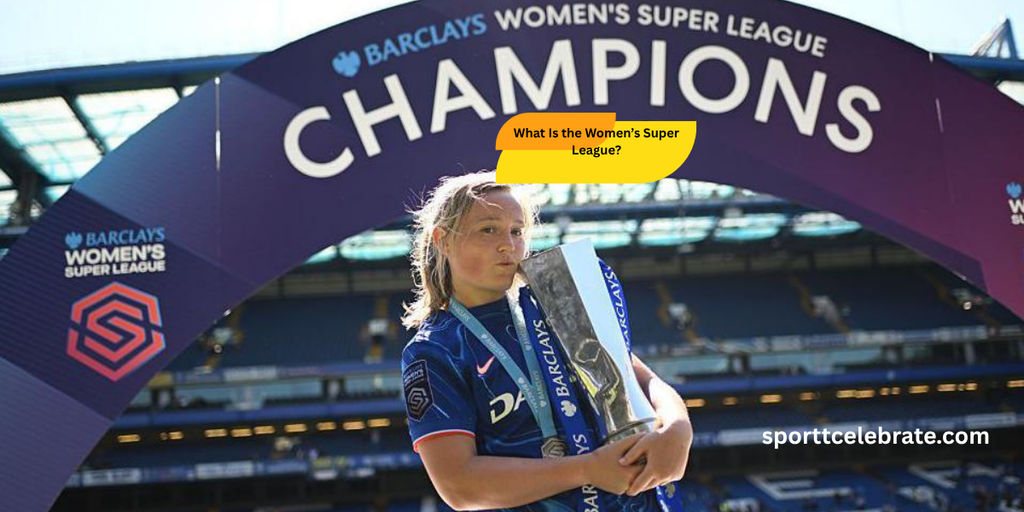
The Barclays Women’s Super League, commonly called the WSL, is the top level of professional women’s football in England.
It sits at the top of a wider structure that includes the Barclays Women’s Super League 2, giving clubs a pathway between the professional divisions.
The league combines established teams with ambitious clubs trying to build themselves into regular contenders. That mixture creates a competition where the biggest names attract enormous attention while developing teams can still change the balance.
The WSL’s identity has also evolved. In 2025, the organization operating the professional leagues adopted the name WSL Football, while the second tier became known as Barclays WSL2.
This restructuring reflects a broader attempt to create a stronger professional environment around women’s football.
Must read about: Dominik Szoboszlai: Style, Role and Rise in European Football
Women’s Super League Teams to Know

The 2026/27 competition contains 14 teams, including many of the biggest names in English football. The official fixtures confirm the expanded lineup includes Arsenal, Aston Villa, Birmingham City, Brighton & Hove Albion, Charlton Athletic, Chelsea, Crystal Palace, Everton, Liverpool, London City Lionesses, Manchester City, Manchester United, Tottenham Hotspur, and West Ham United.
| Team | What to Watch |
| Arsenal | European experience and strong tradition |
| Chelsea | Recent domestic dominance |
| Manchester City | 2025/26 champions |
| Manchester United | Growing ambitions at the top level |
| Liverpool | Historic club with a strong football identity |
| Aston Villa | Development and competitiveness |
| Brighton | Building consistency |
| Tottenham Hotspur | Progress against established rivals |
| Everton | Tradition and rebuilding |
| West Ham United | Growth within a competitive league |
| Crystal Palace | New challenge at the top level |
| London City Lionesses | Ambition after promotion |
| Birmingham City | Promotion brings a fresh test |
| Charlton Athletic | Opportunity to establish themselves |
The expanded league makes the competition deeper. More clubs means more matchups, more tactical variety, and more opportunities for emerging players to make an impact.
Chelsea’s Long Reign and Manchester City’s Challenge

For several seasons, Chelsea were the dominant force in English women’s football. The club won the WSL six consecutive times from 2019/20 through 2024/25, and their 2024/25 campaign was particularly impressive because they completed an unbeaten 22-game league season.
But the 2025/26 season changed the picture.
Manchester City won the title, ending Chelsea’s six-year run and claiming their second WSL championship. City had waited ten years between their first title in 2016 and their latest success.
That shift is important because it demonstrates that the league isn’t simply a one-team competition.
Chelsea remain a major force, but Manchester City have shown that the championship can change hands when another team combines quality, consistency, and depth across a full season.
Why the League Is Growing
Growth in women’s football is visible in several areas. Attendance is one of the clearest examples. The WSL’s record crowds have repeatedly increased, including major stadium events involving Arsenal.
The league recorded 59,042 spectators for Arsenal’s 4-1 victory over Chelsea in December 2023, after previous attendance records had already been broken. The broader trend has continued.
WSL Football reported that Barclays WSL attendance had grown by 31% since the 2022/23 season, while WSL2 attendance had increased by 65% over the same comparison period.
That matters because attendance can strengthen the atmosphere around matches while also demonstrating commercial demand.
Bigger Crowds Create Bigger Opportunities
A larger audience can benefit the competition in several ways:
- More people become familiar with the players and clubs.
- Matchday revenue can increase.
- Sponsors gain a larger audience.
- Broadcasters have more reason to invest.
- Young fans gain more opportunities to watch elite players.
- Clubs can build stronger local communities.
Growth therefore isn’t simply about putting more people into stadiums. It can help create a stronger professional ecosystem.
Commercial Growth and Broadcasting
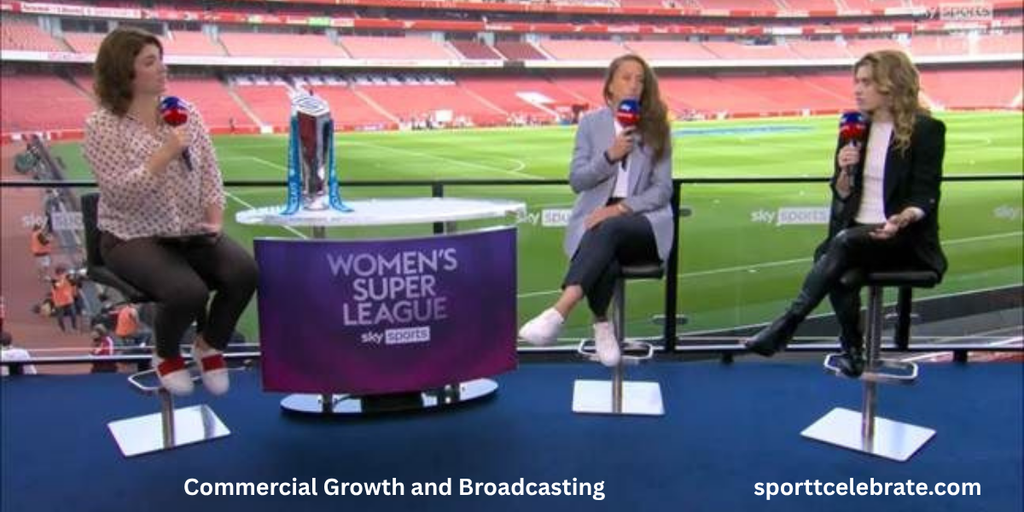
The business side of the competition is also developing. WSL Football reported £17.4 million in revenue for its first year as an independent company, including broadcasting, sponsorship, and licensing income.
It also said its revenue had tripled since the organization took over, while new commercial relationships were expected to appear in later financial results. Broadcasting is particularly important for the international growth of the league.
For the 2026/27 season, CBS Sports becomes the new U.S. home of the Barclays WSL, with Paramount+ scheduled to stream 183 matches each season through the 2029/30 season.
That gives the competition a significant opportunity to reach American soccer fans.
The combination of traditional television, streaming services, social media, highlights, and digital content means supporters can follow the league from almost anywhere.
The Importance of the 14-Team Expansion

One of the biggest developments to watch is the move to 14 teams. WSL clubs voted in June 2026 to expand the top division from 12 to 14 teams for the 2026/27 season.
The change allows up to three clubs to be promoted from WSL2 while the second tier remains a 12-team competition. Expansion changes the competitive environment.
There are more fixtures and more opportunities for clubs to prove themselves. Newly promoted teams also have a chance to establish themselves against some of the strongest sides in the country. However, expansion creates challenges too.
Clubs need deeper squads, better player development, strong medical support, and enough resources to compete over a longer campaign. The teams that manage those demands effectively could gain an advantage.
Must read about: Chelsea Loan Deals: How the Club Uses the Loan Market
Players to Watch
The WSL has become a destination for elite footballers, but one of its most exciting features is the mixture of established stars and emerging players.
The 2025/26 campaign produced several notable individual performances.
Manchester City’s Khadija Shaw scored 21 league goals and became the first player to win three WSL Golden Boots. She also became only the second player, after Sam Kerr, to score at least 20 goals in two WSL campaigns.
Players such as Shaw demonstrate why individual battles can make a league season fascinating.
Fans can watch how attackers perform against different defensive systems, how midfielders control games, and how younger players adapt to the demands of top-level competition.
Tactical Development in Women’s Football

The tactical side of the WSL deserves just as much attention as the famous players. Teams increasingly use sophisticated pressing structures, positional rotations, high defensive lines, controlled buildup, and carefully designed set pieces.
The tactical variety can make matches very different from one another. One club may prefer possession and patient buildup. Another might emphasize quick transitions and direct attacks. A third could focus on pressing opponents high up the pitch.
This variety gives supporters more than individual stars to follow. It also creates opportunities for coaches to experiment.
Why Young Players Matter
Player development is another major part of the league’s future. A growing professional competition creates more pathways for young athletes to move from academy football into senior competition. That matters for the long-term strength of women’s football.
When talented players have opportunities to compete against experienced professionals, they can develop faster and learn how to handle the physical, tactical, and mental demands of elite football. The strongest clubs will need to balance experienced players with emerging talent.
What to Watch in the 2026/27 Season
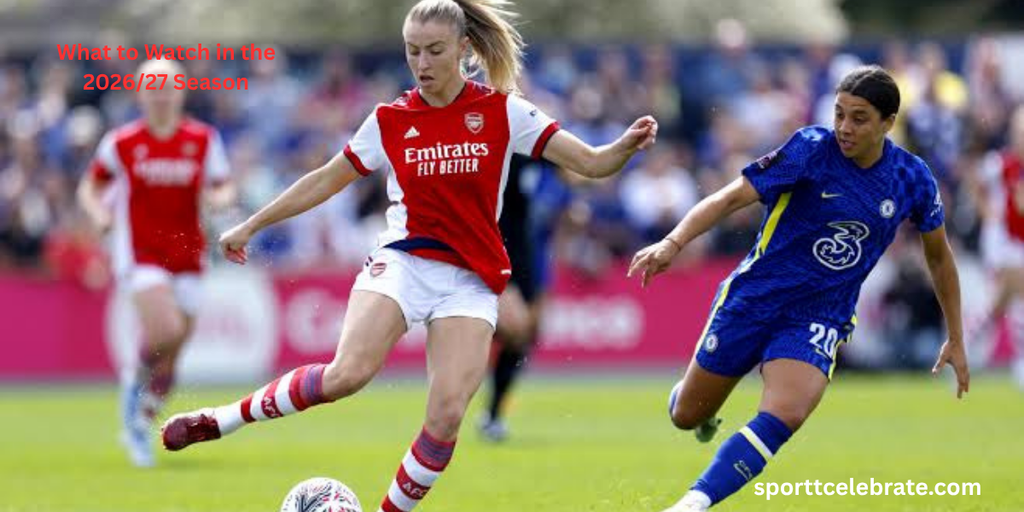
The new season has several obvious storylines. First, Manchester City must defend their title after ending Chelsea’s long winning run. Second, Chelsea will want to respond after losing their six-year grip on the championship.
Third, Arsenal remained a major contender and finished second in 2025/26, while Chelsea finished third. Fourth, the newly expanded league gives promoted teams a chance to challenge established clubs.
The opening weekend itself provides several interesting matchups. London City Lionesses face Manchester United, Manchester City host Birmingham City, Brighton meet Arsenal, and Charlton Athletic host Liverpool.
Those games could provide an early indication of how the expanded competition will look.
The Race for the Title
The championship race could become one of the most interesting parts of the season. Manchester City’s 2025/26 title proved that Chelsea can be challenged. Arsenal’s consistency also keeps them firmly within the conversation.
That creates a three-way storyline involving the defending champions, the former dominant champions, and one of the league’s most established clubs. But football rarely follows a perfect script.
A team outside that group could make a major improvement, particularly if it recruits effectively or develops several young players. That uncertainty is good for the competition.
Why the Women’s Super League Matters
The WSL matters because it represents more than a domestic football competition. It is part of the wider development of women’s professional sport.
As stadium attendances increase, broadcasting expands, commercial partnerships develop, and clubs invest more heavily in their women’s teams, the league becomes increasingly visible. The growth also creates role models for young players.
A girl watching a WSL match today can see professional football as a realistic pathway rather than an unusual opportunity. That cultural effect may ultimately be more important than any single league table.
You will be must like reading about: Sports Technology: How Innovation Is Changing Competition
Final Thoughts
The Women’s Super League is entering an exciting stage. The competition has expanded to 14 teams, Manchester City have taken the championship from Chelsea, major clubs continue to invest, attendance is growing, and international broadcasting is becoming more important.
The 2026/27 campaign should therefore be about more than simply asking who wins the trophy. Fans can watch the title race, follow newly promoted teams, track emerging players, study tactical changes, and see how the league handles its expansion.
The continued growth of the WSL suggests that women’s football in England is moving toward an even larger professional future.
With bigger audiences, stronger commercial foundations, and an increasingly competitive group of teams, the next chapter could be one of the most important yet.
FAQs
What is the Women’s Super League?
The WSL is England’s top professional women’s football competition, featuring leading clubs and elite players.
How many teams are in the WSL?
The league expands to 14 teams for the 2026/27 season.
Who won the 2025/26 WSL title?
Manchester City won the 2025/26 title, ending Chelsea’s six-year championship run.
Is the Women’s Super League growing?
Yes. WSL attendance has grown significantly, with official figures showing a 31% increase since 2022/23.
Where can U.S. fans watch the WSL?
From September 2026, CBS Sports will become the U.S. home of the WSL, with Paramount+ streaming 183 matches per season.

Will Smith, founder of SportCelebrate.com, shares the best sports gear and celebration finds to fuel your passion and joy.